What is Sympathetic Detailing?
One of the big selling points of investing in a metal roof is the lifetime of the materials. The metal used in a metal roof is an investment for the next generation, with steel lasting 50-70 years, and copper over 100 years.
Yet it seems that many recently-installed metal roofs aren’t living up to that material lifespan. What gives?
The details give. Or, in modern parlance, the modern details aren’tgiving.
We’re talking about “evolved domestic (US) detailing” versus “sympathetic detailing”.
Evolved domestic detailing is basically a caulk-and-lap-based practice, just made to look high end. Steel milled for roofing in the United States is generally made to be stiff, at least in part to allow for resilience to shipping of pre-formed panels. Using this stiff, domestic steel, the details of a complex roof have to be completed and sealed using chemical sealants. The catch is that this strategy risks premature failure from capillary draw when the sealant eventually fails after only 10-15 years. Have you ever seen a synthetic material that doesn’t disintegrate when left exposed to UV and weather elements for a decade? Me neither.
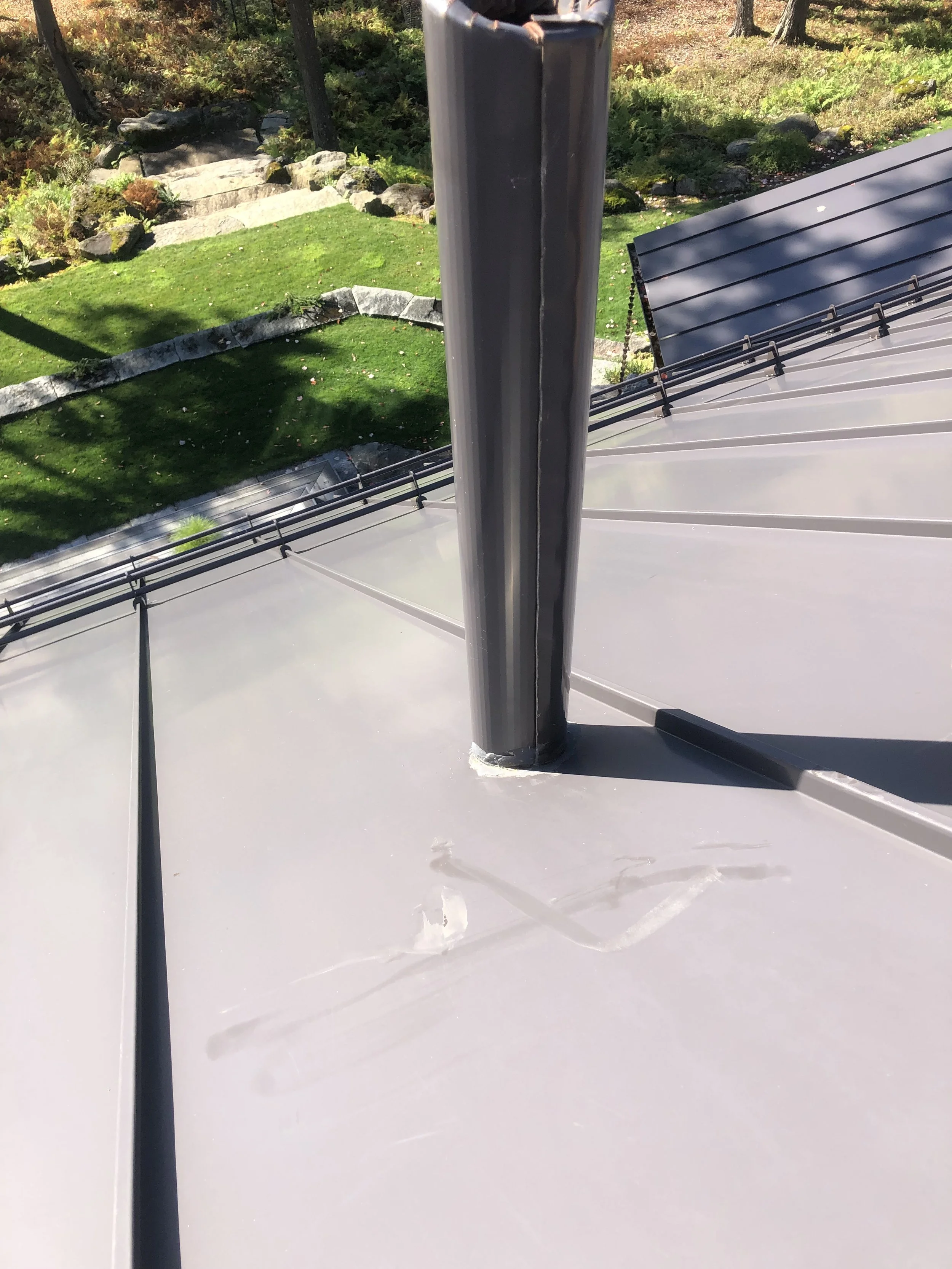
Pipe boot fitted using an "evolved domestic” technique, relying on sealant at the seam.
Sympathetic detailing means that the details should last the lifetime of the roof material. This is European-style folded roofing, where the double folded seam is the primary means of waterproofing. Sealant can be folded into the seam in complicated areas as a backup. To achieve this, we need to use softer materials that can withstand the folding. Until recently, this limited us to copper and zinc (because of those tensile characteristics of domestic steel), but there are European-produced materials available that can be more budget-friendly and still support sympathetic details.
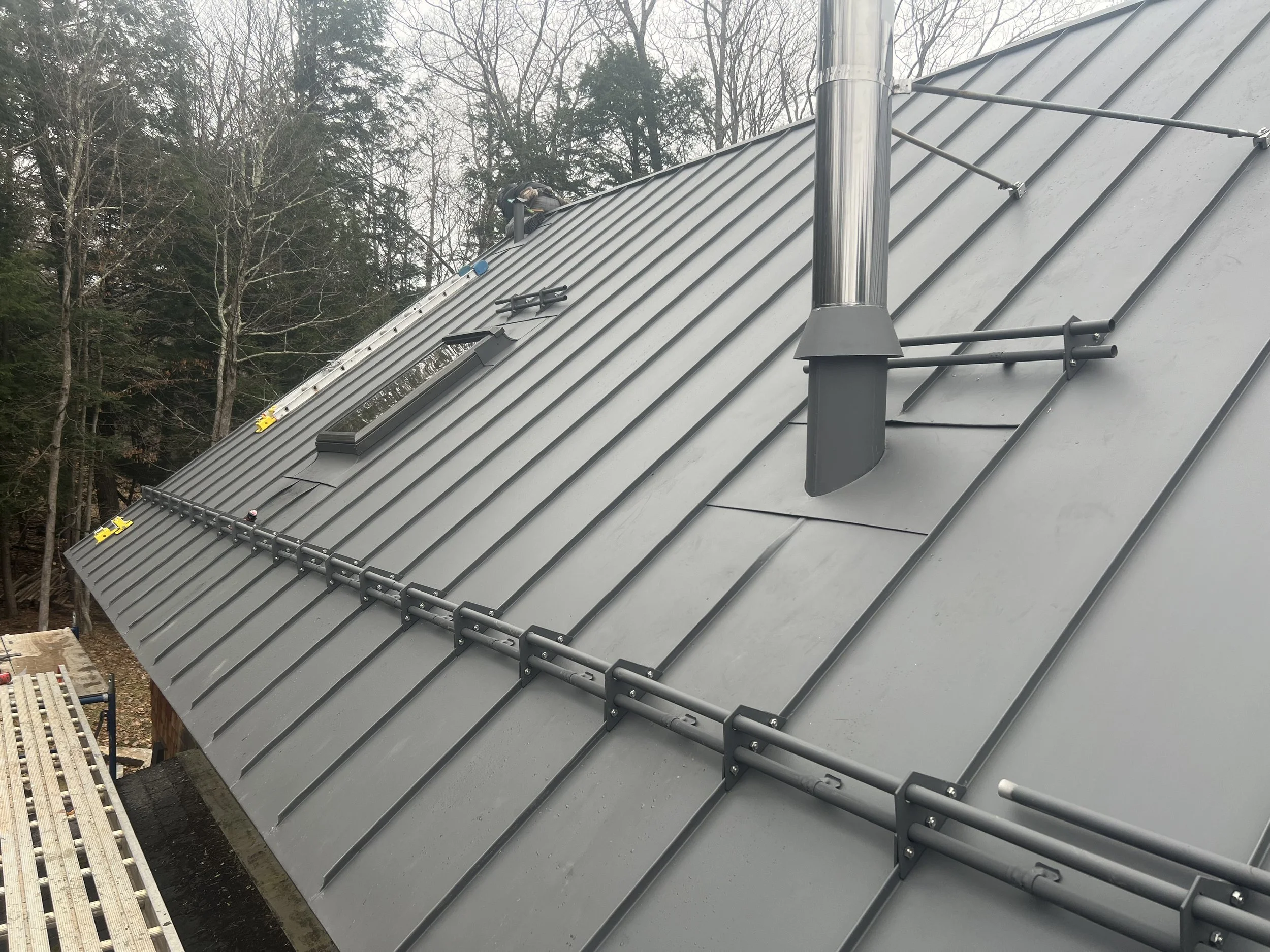
Sympathetic detailing in action. Custom pipe boot and skylight without dependence on chemical sealant.